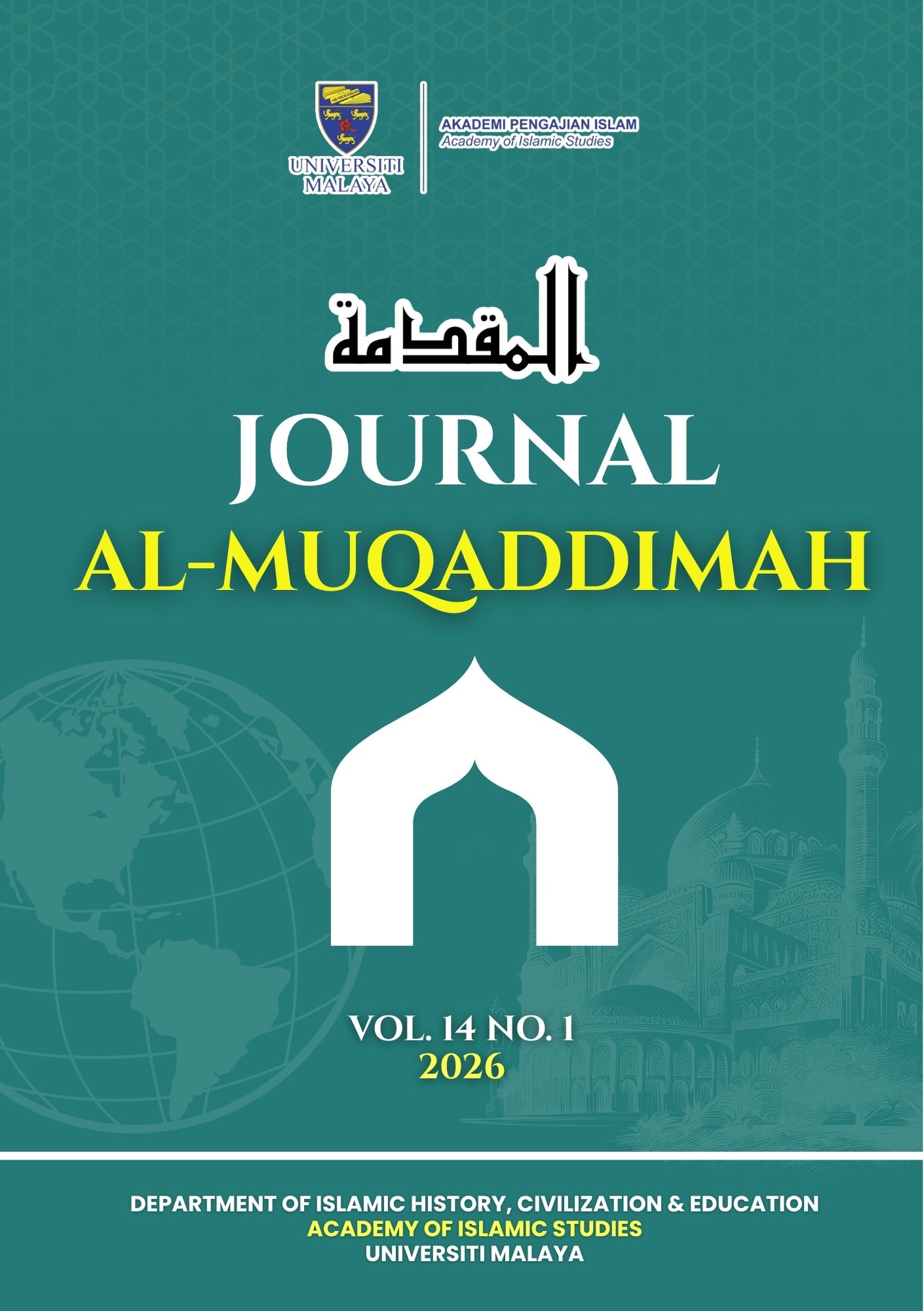
Pengaruh Politik Tunisia, Geopolitik WANA Serta Gerakan Islam Global Terhadap Pembentukan Aktivisme dan Intelektual Rashid Ghannouchi
The Influence of Domestic Politics and North African (WANA) Geopolitics on the Formation of Rashid Ghannouchi’s Activism and Intellectual Thought
DOI:
https://doi.org/10.22452/Keywords:
Rashid Ghannouchi, political domestic, West Asia and North Afrika, activism, intellectualAbstract
This article analyzes the influence of local politics and the geopolitics of West Asia and North Africa (WANA) on the formation of Rashid Ghannouchi’s activism and intellectual thought. As a contemporary thinker and activist within the Islamic movement, Ghannouchi has made significant contributions to the development of Islam in Tunisia, while also contributing to scholarly debates on politics in Islam. The study employs a qualitative approach through document analysis, including Ghannouchi’s writings and secondary literature related to Tunisia’s political history and regional dynamics. From the perspective of domestic politics, the experience of authoritarian rule under Habib Bourguiba and Ben Ali shaped the orientation of Ghannouchi’s discourse, particularly his emphasis on democracy and human rights. At the same time, the geopolitical context of WANA influenced Ghannouchi’s realistic approach in navigating Tunisian politics, especially in the post-revolution period. The findings indicate that Ghannouchi’s moderate activism and intellectual development were formed through a dynamic interaction between domestic pressures and regional geopolitical realities.
Downloads
Published
Issue
Section
License
Copyright (c) 2026 Journal Al-Muqaddimah

This work is licensed under a Creative Commons Attribution-NonCommercial-ShareAlike 4.0 International License.
By submitting manuscripts to the Al-Muqaddimah, authors agree to transfer copyright to the journal. However, authors may republish their work or grant others permission to republish it; in which case it should be accompanied by a proper acknowledgment that the work was originally published in the Al-Muqaddimah. The journal adopt CC-BY-NC-SA licence which authors may also share and distribute their article anywhere of non-commercial website, social media and repositories immediately on publication.
Authors may also reuse the Abstract and Citation information (e.g. Title, Author name, Publication dates) of their article anywhere at any time including social media such as Facebook, blogs and X (Twitter), providing that where possible a link is included back to the article on the journal site.